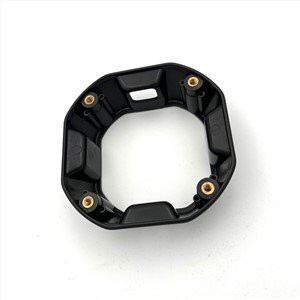
When we receive a new set of molds that need proofing and testing, we are always eager to try out a result earlier and pray for a smooth process so as not to waste working hours and cause troubles.
But here we must remind two things:
First, mold designer and manufacturing technicians sometimes make mistakes. If we do not be alert when testing models, we may cause great damage due to minor mistakes.
Second, the result of the model test is to ensure the smooth production in the future. If reasonable steps are not followed and proper records are not made in the mold test process, the smooth progress of mass production cannot be guaranteed. What we emphasize more is that "if the mould is used smoothly, the profit recovery will be increased rapidly, otherwise the cost loss will be more than the cost of the mould itself".
II. Precautions before Model Test
1. Understand the relevant information of the mold:
It is better to obtain the design drawing of the mold, analyze it in detail, and get a mold technician to participate in the mold test.
2. First check its mechanical cooperation on the workbench:
Attention should be paid to scratch, missing parts, looseness and other phenomena, whether the movement of the die to the sliding plate is true, whether there is leakage in the water channel and air pipe joint, and whether the opening of the die is limited should also be marked on the die. If the above actions can be done before the die is hung, the waste of working hours caused by finding problems when the die is hung and disassembling the die can be avoided.
3. When it is determined that all parts of the mold are acting properly, it is necessary to select a suitable test injection machine. Attention should be paid to: (a) injection capacity; (b) the width of the guide rod; (c) maximum opening distance; (d) accessories; Whether it is complete, etc. After everything is confirmed that there is no problem, the next step is to hang the mold. During hanging, care should be taken not to take it off before locking all the clamping plates and opening the mold, so as not to loosen or break the clamping plates and cause the mold to fall off.
After the mold is installed, carefully check whether the mechanical actions of each part of the mold, such as slide plate, thimble, tooth withdrawing structure and limit switch, are true. And pay attention to whether the injection nozzle is aligned with the feed inlet. The next step is to pay attention to the mold closing action. At this time, the mold closing pressure should be lowered. During manual and low-speed mold closing actions, attention should be paid to see and hear whether there are any unsmooth actions and abnormal sounds.
4. Raise mold temperature:
According to the performance of the raw materials used in the finished product and the size of the mold, an appropriate mold temperature controller is selected to raise the temperature of the mold to the required temperature during production.
Once the mold temperature is increased, the actions of all parts must be checked again, because the steel may cause mold sticking due to thermal expansion, so the sliding of all parts must be paid attention to to avoid strain and vibration.
5. If there is no experimental planning rule in the factory, we suggest that only one condition can be adjusted at a time when adjusting the test conditions, so as to distinguish the influence of single condition change on the finished product.
6. According to the different raw materials, bake the raw materials properly.
7. Try to use the same raw materials as possible for future mass production.
8. Do not try the mold completely with inferior materials. If you have color requirements, you can arrange the color test together.
9. Internal stress and other problems often affect the secondary processing. After the finished product is stable after the test, the secondary processing mold shall be closed slowly. The mold closing pressure shall be adjusted and operated several times to check whether there is any phenomenon such as uneven mold closing pressure to avoid burrs and mold deformation of the finished product.
After the above steps have been checked, the mold closing speed and pressure shall be lowered, the safety button and ejection stroke shall be fixed, and then the normal mold closing and closing speed shall be adjusted. If the limit switch of the maximum stroke is involved, the mold opening stroke should be adjusted slightly shorter, and the high-speed mold opening action should be cut off before the maximum stroke of the mold opening. This is due to the fact that the high-speed action stroke is longer than the low-speed one in the whole mold opening stroke during mold filling. The mechanical ejection rod on the plastic machine must also be adjusted to act after the full-speed mold opening action to prevent the ejector pin plate or stripping plate from deforming due to stress.
Please check the following items again before making the first mold injection:
(a) Whether the charging stroke is too long or insufficient.
(b) Whether the pressure is too high or too low.
(c) Whether the filling speed is too fast or too slow.
(d) Whether the processing cycle is too long or too short.
In order to prevent short shot, fracture, deformation, burr and even damage to the mold of the finished product.
If the processing cycle is too short, the thimble will push through the finished product or peel the ring and crush the finished product. This kind of situation may take you two or three hours to take out the finished product.
If the processing cycle is too long, the thin part of the mold core may break due to the shrinkage of the rubber compound.
Of course, you can't predict all the problems that may occur during the mold test, but full consideration and timely measures in advance will help you avoid serious and expensive losses.
Three, the main steps of the model test
In order to avoid unnecessary waste of time and troubles in mass production, it is indeed necessary to pay patience to adjust and control various processing conditions, find out the best temperature and pressure conditions, and formulate standard mold test procedures, which can be used to establish daily working methods.
1. Check whether the plastic material in the charging barrel is correct and whether it is baked according to regulations (different results are likely to be obtained if different raw materials are used for mold test and production).
※. Test whether the temperature of the material pipe and the temperature of the mold are suitable for the processed raw materials.
3. Adjust the pressure and injection quantity in order to produce a finished product with satisfactory appearance, but do not run burrs, especially when some cavity finished products are not completely solidified. Before adjusting various control conditions, you should think about it, because a slight change in mold filling rate may cause great mold filling changes.
4. Wait patiently until the conditions of the machine and mold stabilize, even for medium-sized machines, it may take more than 30 minutes. This period of time can be used to check possible problems with the finished product.
5. The advancing time of the screw cannot be shorter than the solidification time of the gate plastic, otherwise the weight of the finished product will be reduced and the performance of the finished product will be damaged. And when the mold is heated, the advance time of the screw also needs to be lengthened to compact the finished product.
6. Reasonable adjustment to reduce the total processing cycle.
7. Run the newly transferred conditions for at least 30 minutes until they are stable, then continuously produce at least a dozen full pattern products, mark the date and quantity on their containers, and place them separately according to the mold cavities so as to test the stability of their actual operation and derive reasonable control tolerances. (especially valuable for multi-cavity molds).
8. Measure and record the important dimensions of continuous samples (measure again when the samples are cooled to room temperature).
9. When comparing the measured sizes of each pattern, attention should be paid to:
(a) whether the size is stable.
(b) Whether there is a tendency for some dimensions to increase or decrease, indicating that the machining conditions are still changing, such as poor temperature control or oil pressure control.
(c) Whether the dimensional change is within the tolerance range.
10. If the size of the finished product is not changed and the processing conditions are normal, it is necessary to observe whether the quality of the finished product of each mold cavity is acceptable and its size is within the allowable tolerance. Record the number of the measured cavities that are continuous, larger or smaller than the average value so as to check whether the size of the mold is correct.
Record and analyze the data as the need to modify the mold and production conditions and as a reference for future mass production.
1. Make the processing run longer to stabilize the melt temperature and hydraulic oil temperature.
2. Adjust the machine conditions according to the size of all finished products that are too large or too small. If the shrinkage rate is too large and the finished products appear insufficient in shot materials, reference can also be made to increase the gate size.
3. The size of each mold cavity is too large or too small to be corrected. If the size of the mold cavity and the door are still correct, then the machine conditions, such as mold filling rate, mold temperature and pressure of each part, should be changed and whether some mold cavities are filling slowly should be checked.
4. according to the matching situation of the finished products of each mold cavity or the mold core displacement, the mold filling rate and mold temperature may be adjusted again to improve its uniformity.
5. Check and modify the faults of the injection machine, such as the defects of oil pump, oil valve, temperature controller, etc., which will cause changes in processing conditions. Even the perfect mold cannot exert good working efficiency in poorly maintained machines.
After reviewing all the recorded values, keep a set of samples to check and compare whether the corrected samples have improved.
IV. Important Matters
Properly keep all records of sample inspection during the mold test process, including various pressures in the processing cycle, melting glue and mold temperature, material pipe temperature, injection action time, screw feeding period, etc. In short, all data that will help to successfully establish the same processing conditions in the future should be kept so as to obtain products that meet the quality standards.
At present, the mold temperature is often neglected in the factory mold test, and it is the most difficult to master the mold temperature during the short-term mold test and future mass production. The incorrect mold temperature can affect the sample size, luminosity, shrinkage, flow pattern and material shortage, etc. If the mold temperature controller is not used, it may be difficult to grasp the mold temperature for future mass production.